
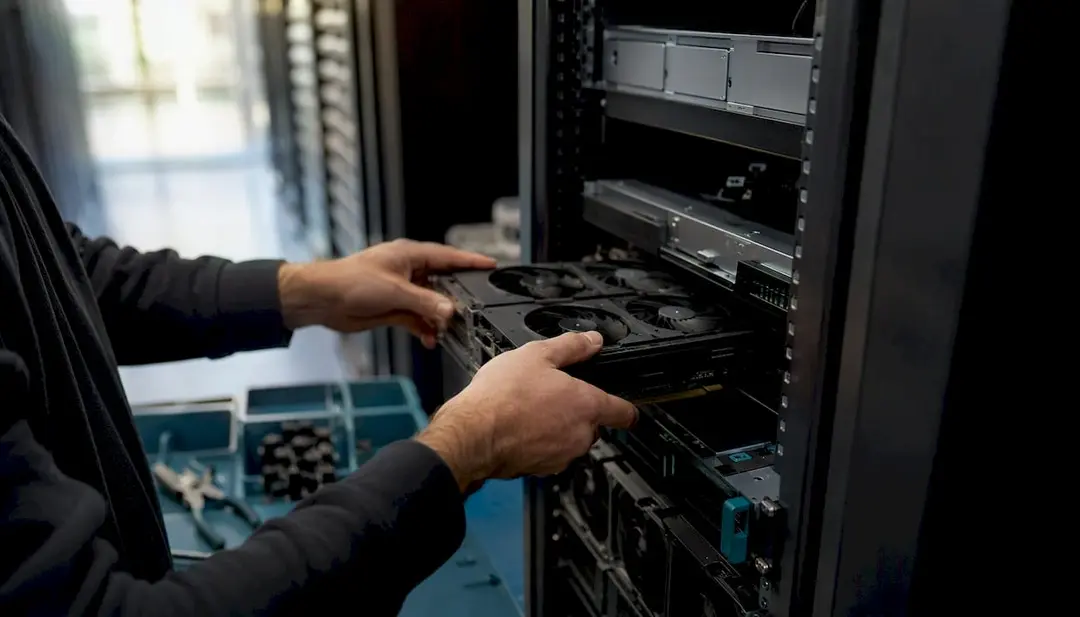
Third-party maintenance (TPM) is independent hardware support delivered by a provider other than the original equipment manufacturer. For UK organisations running mature, stable infrastructure, it can provide a practical alternative to renewing every asset with the OEM or replacing equipment simply because it has reached an end-of-service-life date.
The decision should be evidence-led. Before issuing an RFP, map each asset against its OEM lifecycle status, firmware dependency, business criticality and actual service-level requirement. This shows which devices may be suitable for independent maintenance, which should stay with the OEM and where a hybrid support model could reduce complexity without weakening resilience.
Key takeaways
TPM is most relevant to stable, mature hardware where the organisation no longer depends on regular OEM firmware or feature updates.
A hybrid model is often more appropriate than moving an entire estate at once: keep firmware-sensitive or warranty-covered systems with the OEM and assess mature assets separately.
Service levels must be matched to each site and device class. Four-hour response, next-business-day cover and customer-held spares have different operational and commercial implications.
UK buyers should verify engineer coverage, parts logistics, data handling, insurance, escalation and contractual accountability rather than relying on headline savings claims.
Myrmekes provides one commercial and operational point of contact. UK service delivery is provided by Cantel through a network of 66 engineers and six depots. Requirements outside the UK are coordinated through appropriate regional partners.
What third-party maintenance covers
A typical hardware-maintenance scope can include remote triage, fault diagnosis, field-engineer attendance, replacement parts, repair, return-material handling and management of agreed spare stock. The exact scope should be written against an asset list and location schedule rather than described only in broad marketing terms.
TPM normally covers physical hardware. It does not automatically provide OEM firmware, proprietary software patches, active warranty rights or access to the manufacturer’s escalation route. Those boundaries matter particularly for security appliances, hyperconverged platforms and equipment whose safe operation depends on current vendor software.
Procurement teams should therefore ask a simple question for every device class: if the hardware fails, what must the maintenance provider restore, and if a security or software issue arises, who remains responsible? A useful contract makes both answers explicit.
When TPM fits a UK IT estate
TPM is worth evaluating when equipment remains reliable but is approaching or beyond the OEM’s published support date; when a refresh is not yet operationally justified; when a multi-vendor estate would benefit from a single support structure; or when an organisation needs short-term cover during migration, consolidation or decommissioning.
It may be the wrong choice where an active OEM warranty still offers good value, where regular firmware and security releases are essential, where an application vendor requires OEM-backed hardware support, or where a planned refresh is close enough that a new maintenance contract would add little benefit.
The strongest approach is usually selective. Classify assets by risk and dependency, then choose OEM, TPM, time-and-materials or customer-held spares for each group. This is more defensible than moving every device to one support model for convenience.
SLAs, coverage and commercial questions
Response time is only one part of a service level. Ask when the clock starts, whether the commitment is remote response or engineer arrival, which hours are covered, when parts must be available and how escalation works if the first intervention does not restore service.
Coverage must be tested against the real estate. Provide prospective suppliers with site postcodes, access constraints, supported models and required hours. Ask them to explain engineer and parts coverage for every location rather than accepting a generic national or global claim.
Pricing may be structured per device, per site, by service tier or as a hybrid of contracted cover and time-and-materials work. Compare like with like: asset scope, exclusions, parts ownership, annual price changes, minimum term, termination rights and chargeable exceptions can matter more than the headline rate.
Any savings estimate should be based on the customer’s inventory and current OEM quotation. A credible provider should be willing to show the assumptions behind its proposal instead of applying a generic market percentage.
Data security and contract controls
When an engineer replaces a drive or decommissions a device, the contract should define chain of custody, the agreed data-sanitisation standard, evidence of disposal and responsibility for any data-handling failure. UK organisations should align these provisions with their information-security policies and applicable UK data-protection obligations.
If engineers may access systems containing personal data, the parties should determine whether processor obligations arise and document access controls, confidentiality, incident reporting and deletion or return of data. Legal and information-security teams should review the final wording for the organisation’s circumstances.
Also verify professional indemnity, public liability and cyber cover where relevant; the parts-sourcing policy; warranties on replacement parts; liability caps; service credits; termination assistance; and the process for returning customer-owned spares or data-bearing equipment.
How to evaluate a UK TPM provider
Ask for an asset-level capability review, not simply a list of supported brands. The provider should identify any models it cannot support, any firmware dependencies that remain with the OEM and any locations where the requested SLA requires a different parts strategy.
Request evidence for the delivery organisation that will actually perform the work. Relevant evidence may include current certifications, insurance documents, engineer and depot coverage, escalation procedures, sample reporting and references that are appropriate to the proposed scope.
Clarify subcontracting and partner use. Partner delivery is not inherently a weakness, but accountability, vetting, data handling, escalation and service measurement should remain visible to the customer. For multi-country requirements, ask who contracts, who dispatches and who owns resolution in each region.
How Myrmekes structures delivery
Myrmekes acts as a single commercial and operational point of contact for support contracts, engineering resources, professional services and hardware fulfilment across multi-vendor estates. It helps customers translate an inventory and site requirement into a support scope that can be compared and contracted.
Within the UK, service delivery is provided by Cantel through its network of 66 engineers and six depots. The relevant ISO certifications and B Corp status belong to Cantel and can be reviewed during due diligence. Myrmekes should not be described as independently holding those credentials.
Where a customer needs support or professional-services delivery outside the UK, Myrmekes coordinates appropriate regional partners. The proposed coverage, service level and accountable delivery party should be confirmed for each country before contract signature.
For Dell EMC estates, Myrmekes also publishes lifecycle resources that help teams identify relevant end-of-service-life dates and plan a support transition. These resources support the assessment; the final recommendation still depends on the platform, configuration, firmware needs and business role of each asset.
A practical procurement sequence
Start with a verified inventory covering model, serial number, location, lifecycle status, warranty position, firmware dependency and business owner. Remove retired assets and resolve gaps before asking providers to quote.
Next, assign a service tier to each asset class. Reserve the fastest response for equipment whose failure creates a genuine business interruption; use next-business-day cover, customer-held spares or time-and-materials support where that better matches the risk.
Issue a structured request that includes the asset list, site schedule, required hours, data-handling rules, reporting expectations and contract terms. Ask bidders to record assumptions and exceptions against the same template so comparisons remain meaningful.
Before award, validate coverage, parts, insurance, credentials, references and escalation. Agree an onboarding plan, named contacts and a method for keeping the supported-asset list current. Review performance and lifecycle decisions throughout the contract rather than waiting for renewal.
Speak to Myrmekes
If you are reviewing OEM renewals, approaching EOSL dates or trying to simplify a multi-vendor support estate, Myrmekes can help you build the asset and service-level picture before you seek firm pricing. The first conversation is a practical scope check: what is installed, where it is located, what cover it needs and which dependencies must remain with the OEM.
Book a discovery call at https://myrmekes.co.uk/contact.html or review the Dell EMC lifecycle and support resources at https://myrmekes.co.uk/dell-emc-eosl-support.html and https://myrmekes.co.uk/dell-emc-lifecycle-dates.html.
Talk through your estate
If you are weighing support, lifecycle or engineering options, start with the assets, locations and outcomes that matter.
Request a 15-minute scoping call